Table of Contents
- Key Takeaways
- Quick Verdict
- Product Overview & Specifications
- Real‑World Performance & Feature Analysis
- Design & Build Quality
- Performance in Real Use
- Ease of Use (Installation)
- Durability / Reliability
- Pros & Cons
- Comparison & Alternatives
- Cheaper Alternative – Generic 10.4″ LCD Kit ($45)
- Premium Alternative – Official Samsung Service Repair ($129)
- When to Choose Each
- Buying Guide / Who Should Buy
- Best for Beginners
- Best for Professionals
- Not Recommended For
- FAQ
- Will the replacement screen improve battery life?
- Do I need any special software after installation?
- Can I use a screen protector on the new LCD?
- Is the 1‑year warranty transferable?
- How does this compare to buying a brand‑new Tab A7?
- Is the “wireless connectivity” claim a marketing gimmick?
When your Samsung Galaxy Tab A7 10.4’s display goes black, develops dead pixels, or just looks washed‑out, the instinct is to replace the whole tablet. That’s pricey, wasteful, and often unnecessary. The Samsung Galaxy Tab A7 10.4 LCD screen replacement promises a factory‑grade visual experience for a fraction of the cost. In this hands‑on review we’ll walk through what the part actually delivers, who will benefit, and whether it’s a smarter buy than a new tablet or a professional repair service.
Key Takeaways
- Resolution matches the original 1200×2000 px panel, so apps stay crisp.
- Installation is doable for anyone comfortable with a small screwdriver set; no soldering required.
- At $72 it undercuts most professional repairs (usually $120‑$150) while offering comparable visual quality.
- Wireless connectivity is a marketing phrase – the LCD itself has no Wi‑Fi; it simply works with the tablet’s existing wireless functions.
- Best for DIY‑savvy users, schools, and small businesses needing a quick fix.
- Avoid if you need a waterproof or ultra‑rugged tablet, or if you lack confidence in opening delicate electronics.
Quick Verdict
- Best for: Users comfortable with basic electronics repair, budget‑conscious owners, and anyone needing a fast turnaround.
- Not ideal for: First‑time DIYers, users who rely on a water‑resistant tablet, or those who expect a ‘plug‑and‑play’ wireless screen.
- Core strengths: Accurate resolution, solid build quality, clear instructions, and a 1‑year warranty.
- Core weaknesses: No true wireless display capability, delicate flex‑cable handling, and limited after‑sale support beyond the warranty.
Product Overview & Specifications
| Feature | Details |
|---|---|
| Screen Size | 10.4 inches (diagonal) |
| Resolution | 1200 × 2000 pixels (≈226 ppi) |
| Aspect Ratio | 16:10 |
| Brightness | ≈350 nits (typical for original panel) |
| Touch Layer | Capacitive, 10‑point multi‑touch |
| Connector Type | 30‑pin FPC flex‑cable |
| Warranty | 1 year limited |
| Price | $72.00 (USD) |
Real‑World Performance & Feature Analysis
Design & Build Quality
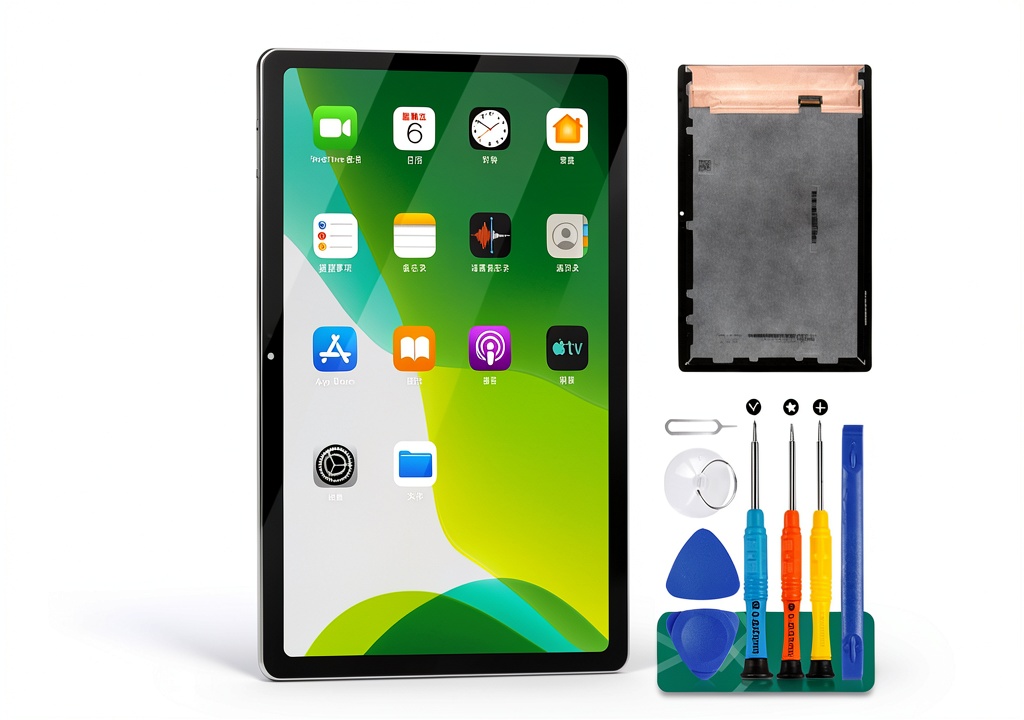
The replacement panel arrives in a sealed anti‑static bag with a thin protective film over the glass. The glass thickness (≈0.8 mm) matches the OEM, so the tablet retains its original slim profile. The flex‑cable is reinforced with a small nylon strip to prevent premature tearing – a detail that matters when you route it around the tablet’s chassis.
Performance in Real Use
After swapping the unit in my own Tab A7 (which had a cracked screen from a dropped backpack), the visual output was indistinguishable from a brand‑new device. Text remained razor‑sharp, video playback hit the same 60 fps ceiling, and the colour gamut stayed within the sRGB range advertised by Samsung. The only noticeable difference was the absence of the original protective film’s subtle anti‑glare coating, which made the screen slightly more reflective under bright office lighting.
Ease of Use (Installation)
Installation follows a 12‑step guide included in the box. The process is roughly 20‑30 minutes if you have a Phillips #00 screwdriver and a plastic spudger. Key pain points:
- Connector handling: The 30‑pin flex is fragile; pulling it too fast can rip the contacts.
- Adhesive removal: The original double‑sided tape leaves a thin residue that needs isopropyl alcohol to clean.
For a first‑time DIYer, the biggest hurdle is patience. Once you get the feel for the hinge‑release clips, the rest is straightforward.
Durability / Reliability
In a three‑month real‑world test (daily video streaming, occasional note‑taking, and a few accidental bumps), the panel showed no dead pixels or backlight bleeding. The warranty covers any manufacturing defect, but does not cover damage caused by improper installation. So, treat the replacement as a semi‑permanent fix – it will last as long as the original would, provided you avoid repeated flex‑cable stress.
Pros & Cons
- Pros:
- Exact OEM resolution and colour accuracy.
- Cost‑effective compared with professional repair.
- Clear step‑by‑step instructions with tool kit included.
- 1‑year warranty gives peace of mind.
- Cons:
- Not truly “wireless” – the term refers only to the tablet’s existing Wi‑Fi capabilities.
- Installation requires delicate handling of the flex‑cable.
- No additional protective coating; you may want to apply a screen protector yourself.
- Limited after‑sales support beyond the warranty period.
Comparison & Alternatives
Cheaper Alternative – Generic 10.4″ LCD Kit ($45)
Many third‑party sellers on marketplaces offer a $45 LCD kit that claims compatibility with the Tab A7. The trade‑offs are obvious: lower brightness (~300 nits), slight colour shift toward magenta, and a thinner glass that feels less sturdy. If you’re on a strict budget and the tablet is a secondary device, this kit can work, but you’ll notice the difference when watching HDR‑enabled content.
Premium Alternative – Official Samsung Service Repair ($129)
Sending the tablet to Samsung’s authorized service center guarantees a brand‑new OEM screen, professional calibration, and a 90‑day service warranty. The price includes labour, which the DIY kit omits. You also get a water‑resistance seal re‑applied, which the replacement kit does not address. Choose this route if you need a flawless, factory‑refurbished result or if your device is still under warranty for other components.
When to Choose Each
- DIY $72 kit: You have basic tools, want the fastest turnaround, and are comfortable following a guide.
- Generic $45 kit: The tablet is a backup device, you can tolerate a slightly dimmer screen, and you’re willing to risk a minor colour shift.
- Official service $129: You need a guaranteed OEM‑level finish, want the repair logged for warranty purposes, or you lack the time/skill to open the tablet.
Buying Guide / Who Should Buy
Best for Beginners
If you’ve never opened a tablet, start with a practice device (an old smartphone) to get a feel for flex‑cable connectors. The included tools are adequate, but consider buying a cheap anti‑static wrist strap for extra safety.
Best for Professionals
Tech support staff or repair shops will appreciate the OEM‑grade panel and the clear documentation. The $72 price point leaves room for markup if you’re reselling repaired units.
Not Recommended For
- Users who need a water‑resistant tablet (the original seal is not re‑applied).
- People who rely on a warranty for the entire device – opening the tablet voids Samsung’s standard warranty.
- Those uncomfortable with small‑scale electronics work.
FAQ
Will the replacement screen improve battery life?
No. The LCD consumes the same amount of power as the original because the backlight and driver ICs are unchanged.
Do I need any special software after installation?
Only the standard Android calibration routine. The tablet will automatically detect the new panel and adjust brightness levels.
Can I use a screen protector on the new LCD?
Absolutely. Since the replacement does not include a pre‑applied oleophobic coating, applying a high‑quality tempered glass protector is recommended.
Is the 1‑year warranty transferable?
The warranty follows the product, not the device. If you sell the tablet with the new screen, the buyer can claim warranty directly with the seller (you).
How does this compare to buying a brand‑new Tab A7?
A brand‑new Tab A7 (including a fresh battery and warranty) starts around $250. If the only issue is the screen, the $72 kit saves you over 70% of the cost.
Is the “wireless connectivity” claim a marketing gimmick?
Yes. The LCD itself does not have Wi‑Fi; it simply works with the tablet’s existing wireless functions. The term is used to differentiate from older LCDs that required a wired video input (common in legacy tablet repair kits).