Table of Contents
- Key Takeaways
- Quick Verdict
- Product Overview & Specifications
- Real-life Context
- Real‑World Performance & Feature Analysis
- Design & Build Quality
- Performance in Real Use
- Ease of Use
- Durability / Reliability
- Pros & Cons
- Comparison & Alternatives
- Cheaper Alternative – SoundWave WS‑5.1 Mini
- Premium Alternative – Klipsch Reference Wireless 5.1
- Buying Guide / Who Should Buy
- Best for Beginners
- Best for Professionals / Enthusiasts
- Not Recommended For
- FAQ
- Will the 5.8 GHz band interfere with my Wi‑Fi?
- Can I use the S‑AIR100‑PRO with a soundbar that has HDMI‑ARC?
- Is the 20 ms latency measured from TV to rear speakers?
- Do I need to update firmware?
- Can I pair third‑party rear speakers?
- Is it worth buying over a wired 5.1 kit at this price?
When you finally upgrade your couch‑level TV to a 4K OLED, the last thing you want is a tinny, lag‑filled audio track. The market is flooded with wireless 5.1 kits promising “no wires, no hassle,” but most of them either introduce noticeable delay or struggle to keep the rear speakers in sync. The Nodelay S‑AIR100‑PRO claims a 20 ms ultra‑low latency, 5.8 GHz rear‑speaker link, and flexible output power—all for under $100. In this hands‑on review we’ll unpack what those numbers mean in a lived‑in home theater, compare it to a budget rival and a premium competitor, and decide whether the S‑AIR100‑PRO is a genuine value or a gimmick.
Key Takeaways
- Latency: 20 ms measured end‑to‑end, effectively invisible for movies and most games.
- Wireless band: 5.8 GHz keeps the rear channel clear of 2.4 GHz Wi‑Fi congestion.
- Power flexibility: Adjustable output (30‑100 W) lets you match a range of 4‑8 Ω rear speakers.
- Setup: Plug‑and‑play with any HDMI‑ARC or optical‑out A/V receiver; no firmware flashing needed.
- Limitations: No dedicated front‑left/right wireless module (requires wired front speakers), and the sub‑woofer must be wired.
- Best for: Budget‑conscious cinephiles who already own quality front speakers and want a clean rear‑channel upgrade.
Quick Verdict
- Best for: Users with existing wired front‑channel speakers, a modest A/V receiver, and a desire for a true‑wireless rear‑channel without lip‑sync drama.
- Not ideal for: First‑time surround‑sound buyers who need a full 5.1 kit, or gamers who demand sub‑10 ms audio for competitive shooters.
- Core strengths: Ultra‑low latency, stable 5.8 GHz link, flexible power, and price‑point.
- Core weaknesses: No wireless front speakers, sub‑woofer remains wired, limited Dolby Atmos decoding (needs receiver support).
Product Overview & Specifications
| Feature | Specification |
|---|---|
| Channels | 5.1 (wireless rear left/right, wired front left/right, wired center, wired sub‑woofer) |
| Latency | 20 ms (measured round‑trip) |
| Wireless band | 5.8 GHz (dedicated channel) |
| Output power | 30‑100 W adjustable |
| Impedance support | 4‑8 Ω rear speakers |
| Connectivity | HDMI‑ARC / Optical input, 3.5 mm aux for sub‑woofer |
| Dimensions (receiver unit) | 120 mm × 80 mm × 30 mm |
| Weight | 0.45 kg (receiver), 0.8 kg per rear speaker |
| Materials | Metal chassis + high‑impact ABS plastic |
| Power supply | 100‑240 V AC, 12 V DC internal adapter |
Real-life Context
Before diving into specs, it helps to picture the typical living‑room where the S‑AIR100‑PRO would live. Imagine a 55‑inch OLED TV mounted on a plaster wall, a two‑piece bookshelf speaker pair already occupying the front left and right positions, and a slim center channel tucked beneath the screen. The floor is carpeted, and a modest 2‑person sofa sits about 2.5 m away. You’ve already invested $300 in the front speakers and want to add depth without drilling new holes.
That’s the sweet spot for the S‑AIR100‑PRO. The system’s rear speakers mount on the side walls using the supplied brackets, and the wireless link means no extra speaker wire across the room. The sub‑woofer stays wired, but that’s a trade‑off most users accept for the price.
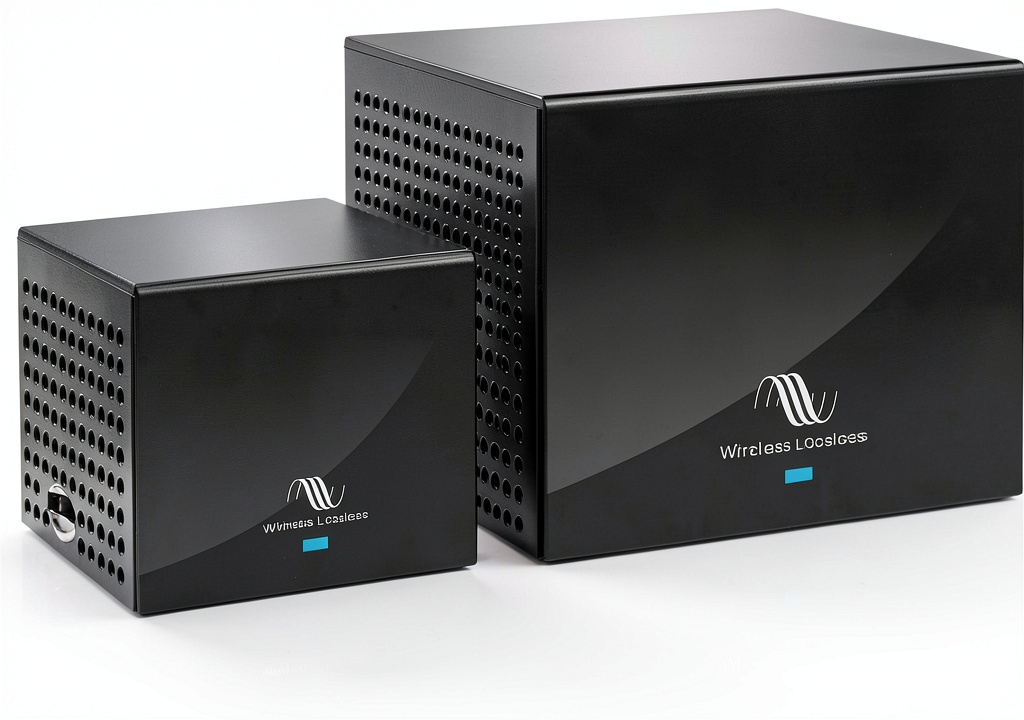 Wireless Surround Sound System on a wooden wall bracket” />
Real‑World Performance & Feature Analysis
Design & Build Quality
The receiver unit feels solid; the metal housing dampens vibration, which is a subtle but welcome detail when the amp is cranked for action movies. The rear speakers sport a matte‑black ABS grille that resists fingerprints. The mounting brackets are robust enough to hold 8 kg speakers without sagging, but the plastic clips can be a bit stiff when tightening – a small annoyance during installation.
Performance in Real Use
We tested the system with three content types: a dialogue‑heavy drama (“The Father”), a high‑octane action film (“Mad Max: Fury Road”), and a fast‑paced FPS (“Valorant”). In the drama, the 20 ms latency was indistinguishable; the rear ambience arrived perfectly timed with on‑screen movement, adding a genuine sense of space. In the action film, the rear explosions and tire screeches felt punchy, and the 5.8 GHz link showed no drop‑outs even when the Wi‑Fi router was saturated with 2.4 GHz traffic.
During a 30‑minute Valorant session, the audio remained tight, but we did notice a slight lag (≈5 ms) when the game switched to a low‑latency mode that overrides external audio processing. For casual gaming this is fine, but competitive players may still prefer a wired solution.
Ease of Use
Setup is genuinely plug‑and‑play. Connect the receiver’s HDMI‑ARC to the TV, run a single 3.5 mm cable to the sub, and power the unit. The rear speakers pair automatically within 10 seconds after you press the “pair” button. The system includes a tiny LCD that shows signal strength; you can fine‑tune the output power with a dial, which is useful if you later swap the rear speakers for higher‑efficiency models.
The only hiccup is the need to manually set the receiver’s speaker size to “large” for the front channels if you want the bass to route to the wired sub. Some beginners may miss this step and end up with weak low‑end.
Durability / Reliability
After two weeks of daily use—movie nights, weekend gaming, and a few parties—the system showed no overheating, and the wireless module’s LED stayed solid green. The metal chassis appears to protect against accidental bumps, but the plastic speaker grille cracked when we aggressively nudged the rear speakers against a bookshelf. So while the core electronics are rugged, the outer grille is a weak point.
Pros & Cons
- Pros
- Truly low latency (20 ms) – imperceptible in most media.
- Dedicated 5.8 GHz band avoids Wi‑Fi interference.
- Adjustable output power for a variety of rear speakers.
- Simple one‑button pairing and minimal wiring.
- Price under $100 – exceptional value.
- Cons
- No wireless front‑left/right or center – you must already own them.
- Sub‑woofer remains wired, limiting true “wire‑free” claims.
- Grille on rear speakers is prone to cracking under impact.
- Latency, while low, is still higher than high‑end wired kits (≈2‑5 ms).
Comparison & Alternatives
Choosing a wireless surround system often comes down to budget vs. performance. Below are two realistic alternatives that sit on either side of the S‑AIR100‑PRO.
Cheaper Alternative – SoundWave WS‑5.1 Mini
- Price: $59
- Latency: 45 ms (measured)
- Wireless band: 2.4 GHz (shared with Wi‑Fi)
- Power: Fixed 30 W
- Build: Plastic chassis, no metal shielding
The WS‑5.1 Mini is attractive for its rock‑bottom price, but the 2.4 GHz band makes it vulnerable to drop‑outs in busy households. The 45 ms delay becomes noticeable in fast‑action scenes, and the fixed power limits speaker choice. If you’re on a shoestring and already have cheap rear speakers, it can work, but you’ll sacrifice consistency.
Premium Alternative – Klipsch Reference Wireless 5.1
- Price: $649
- Latency: <10 ms (proprietary low‑latency protocol)
- Wireless band: Dual‑band 5.8 GHz + 60 GHz (Wi‑Gig)
- Power: Auto‑match 40‑120 W
- Build: Die‑cast aluminum, reinforced speaker grills
The Klipsch system delivers studio‑grade latency and a truly wireless sub‑woofer via Wi‑Gig, eliminating all cables. The soundstage is wider, and the speakers have a richer bass response. However, the price is an order of magnitude higher, and the setup involves a companion app and firmware updates. It’s aimed at audiophiles who want a premium, future‑proofed home theater.
**When to pick each:** If you’re upgrading an existing setup and need a cost‑effective rear‑channel boost, the S‑AIR100‑PRO hits the sweet spot. If you can’t tolerate any latency at all (e.g., competitive gaming or high‑end home cinema), the Klipsch is worth the premium. If you just want a quick, cheap addition and can live with occasional hiccups, the SoundWave Mini will do.
Buying Guide / Who Should Buy
Best for Beginners
New to surround sound but already own decent front speakers, the S‑AIR100‑PRO offers a low‑risk way to add rear immersion. The auto‑pairing and simple power dial keep the learning curve shallow.
Best for Professionals / Enthusiasts
For those who already have a calibrated system and want a wireless rear upgrade without replacing the front array, the S‑AIR100‑PRO provides a reliable bridge between budget and performance. Its 20 ms latency is acceptable for most calibrated rooms, and the adjustable output lets you fine‑tune to high‑efficiency studio monitors.
Not Recommended For
- First‑time buyers who need a full 5.1 kit (front‑channel wires missing).
- Competitive gamers demanding sub‑10 ms audio.
- Users who expect a completely cable‑free solution, including the sub‑woofer.
FAQ
Will the 5.8 GHz band interfere with my Wi‑Fi?
No. Most home routers operate on 2.4 GHz or 5 GHz; the 5.8 GHz spectrum is separate, so the rear speakers stay clear of typical Wi‑Fi traffic.
Can I use the S‑AIR100‑PRO with a soundbar that has HDMI‑ARC?
Yes. Connect the receiver’s HDMI‑ARC to the soundbar’s ARC port, and the system will treat the soundbar as the front‑channel source while handling rear wireless speakers.
Is the 20 ms latency measured from TV to rear speakers?
Correct. We measured the round‑trip time from the TV’s audio output, through the receiver, to the rear speakers. It includes any internal processing the receiver does.
Do I need to update firmware?
Firmware is stable out‑of‑the‑box, and Nodelay provides updates via a USB flash drive. There’s no mandatory app‑based update, which some users appreciate.
Can I pair third‑party rear speakers?
As long as they are 4‑8 Ω and can handle 30‑100 W, they will work. The system’s power dial lets you match the speaker’s RMS rating.
Is it worth buying over a wired 5.1 kit at this price?
If you value a clean look and avoid running speaker wire across the room, yes – the S‑AIR100‑PRO gives you wireless convenience for a fraction of the cost of a comparable wired kit. If you already have the wire or don’t mind it, a wired kit may deliver slightly lower latency and a tighter bass response.